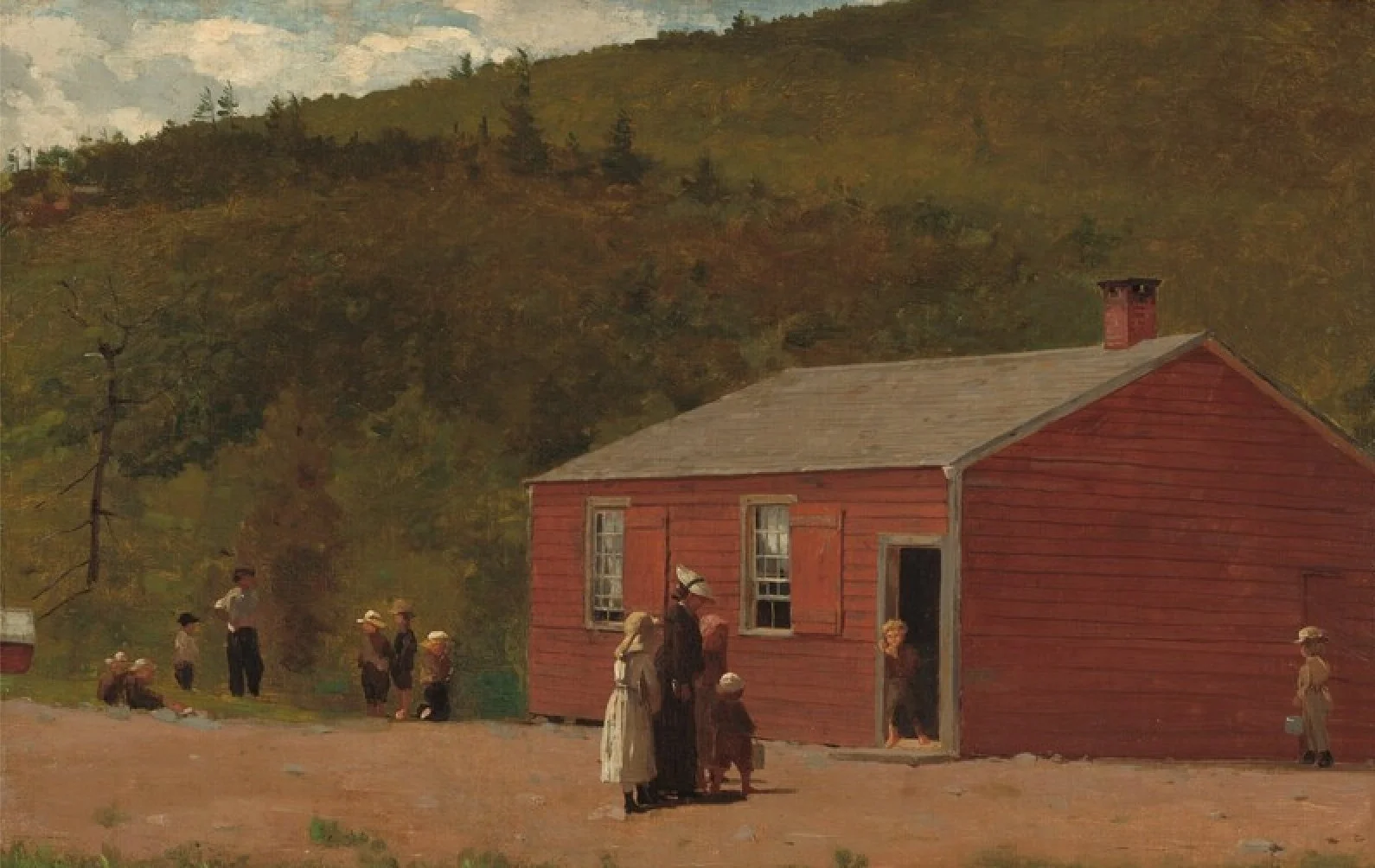
“School Time,“ Winslow Homer, c. 1874; https://www.nga.gov/artworks/164929-school-time
As Penn students know based on the recent uptick in exams and projects, we are barreling towards the end of the Spring semester. During the past summers, I’ve interned abroad, using my evenings and weekends to explore a new city, county, or culture. This summer marks the first time I will be staying in Philly.
This is by choice: I’m a South Jersey girl with a coveted junior summer internship in finance. However, due to the lack of Work From Home support for interns, I am only slated to work 3-4 days a week. This leaves me with an unprecedented amount of free time and an unexpected amount of liberty.
Until this point, I have yet to live without centering learning. Summers in childhood were for vicarious reading, semesters at Penn filled with Collegium Models and too many credits, internships in new industries in new places. Yet now, I am faced with a, dare I say, mundane environment with too much open time. What am I to do without the structure of classes and clubs, nor the adventurous excitement of exploring a new city?
What I propose is not an expansion of my interests, such as picking up a new hobby of rock climbing or running, but rather a translation of the successes of college life into working adulthood.
The magic, or really the curation, of college is that all aspects of oneself are stimulated: the mind, body, and soul. Our goal when we leave Penn, whether it be physically or just emotionally, should be to adapt the “best years of our lives” to something perennial.
Firstly, the mind. I’m sure my fellow Collegium Fellows will agree with me when I describe us as an intellectually curious sort. We are, after all, the students who get together once a week (or more) to discuss the universal questions of intellectual and religious life. Yet, the minds of the general post-college public are too frequently under-stimulated, be it by choice or circumstance. I will not be a part of the lucky few of academia, so I must seek out my own intellectual community. Upon investigating, I found that many of the cultural institutions such as the PMA, Barnes or Philadelphia Film Society host talks or Young Professionals nights to cater to those interested more deeply in engaging with the works and collections. In addition to this, the Free Library of Philadelphia branches hold book clubs and discussion groups.
Secondly, the body. Despite its centrality to our material existence, mine still is a bit underdeveloped and thus, I am no expert. However, I look forward to joining an intramural sports league, ensuring that some level of social pressure is exerted at a much lower cost than a SolidCore class. There, I hope to play in an environment similar to the Ultimate Frisbee team or Pottruck workout classes.
Finally, the soul. It's no secret that Ordinary Time is viewed as less interesting as it is the default season of the liturgical calendar, however, if you are excited for Easter coming up, don’t forget the feeling. Although the seasons change and our attitudes must generally reflect them, being away from a religious community shouldn’t impact your faith.
The same is true for community and friendship in general. Regardless of whether or not you will find yourself among old friends this summer, cultivate new friendships. While this becomes more difficult as we get older and into less and less welcoming environments, if you approach from the collegiate prospective, making a friend out of all those you meet will ease the burden of the workplace.
While not all aspects of college life are to be emulated, we can bring our open approach to learning, experimentality, and friendships into the next stages of our lives. However, this requires the hard work of actively recreating the structures we benefit from.
Take college with you into the world, just maybe leave behind the GPA stress.