Where God Speaks
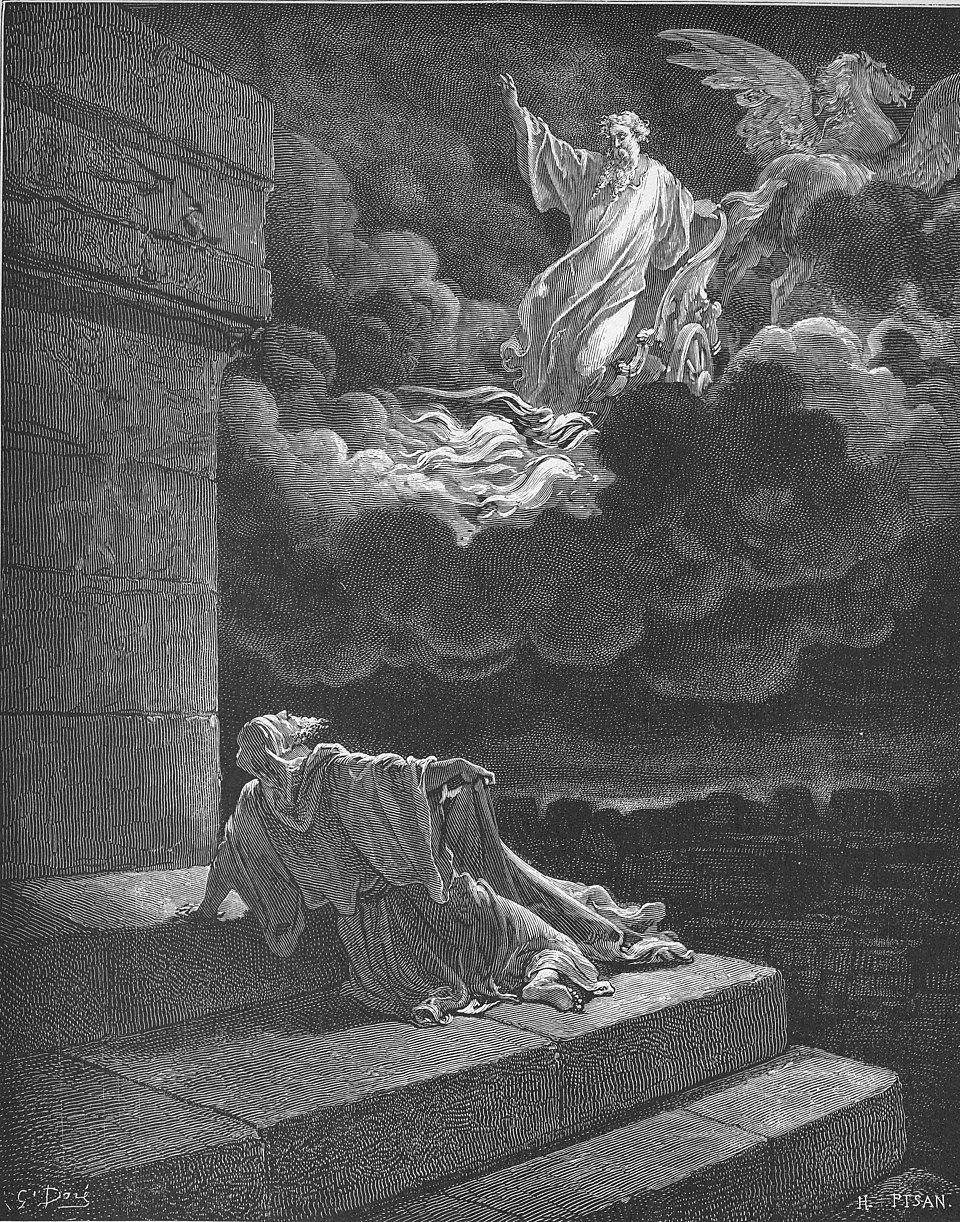
Elijah Ascends to Heaven in a Chariot of Fire, Gustave Dore (1866)
Constant noise has become the norm. The commute to work is characterized by music, a podcast, or an audiobook. Lunch breaks are filled with YouTube, catching up on social media, or reading. What seemingly brings these moments together is a united rejection of stillness.
Incessant stimulation may seem rewarding, as it brings new information, connection, and pleasure. However, this raises a more important reflection: the implication that noise has on our capacity to listen to God. By filling every spare moment with activity, we avoid interior silence. In this manner, prayer and knowing God become difficult - not because He is distant, but because we no longer know how to be present.
God is closer to us than we are to ourselves. He desires a presence with us as we go about our days. He wants to guide us in adventurous excursions and console us in moments of high pressure. However, with our interior lives crowded, we prevent God from taking up space within us.
In silence, not only do we calm our souls, giving ourselves entirely to God as we pray, but we also detach ourselves from our culture and turn inward toward God. In silence, we bring our attention to God in complete devotion.
The importance of silence is not new. God appears to the prophet Elijah not through an earthquake, wind, or fire, but through the power of sheer silence that Elijah was only able to experience upon entering a cave (1 Kings 19:11-13). Additionally, saints such as St. Francis of Assisi frequently climbed Mount Subasio to seek solitude in seclusion and deep contemplation away from worldly distraction (1). In these acts of reorientation, silence reordered his inclinations, and sharpened his desire for God.
By keeping ourselves from being in conversation with God, the dissipation of our religious life becomes a source of joy for the devil. St. Mother Teresa emphasized the value of daily Holy Hours focused on strengthening our union with and deepening our love for Jesus in silence. "The time you spend with Jesus in the Blessed Sacrament is the best time you will spend on earth. Each moment that you spend with Jesus will deepen your union with Him and make your soul everlastingly more glorious and beautiful in Heaven, and will help bring about everlasting peace on earth."
Silence is a wholesome penance as it requires self-denial, willingness, and restraint (2). Many religious orders, congregations, and even ascetic programs strongly insist on restructuring lives through silent retreat, silent hours, and removing distractions from daily life, such as music and TV shows. Mother Teresa spoke of the necessity of silence for a faithful life, demonstrating that it is not a punishment, but instead a means to grow in intimacy with God.
In a culture that glorifies busyness, silences can teach us something different, and bring us closer to something infinite.
Bibliography:
“The Eremo delle Carceri, Saint Francis’ Place of Retreat.” Umbria Tourism, Regione Umbria, www.umbriatourism.it/en/-/the-eremo-delle-carceri-st-francis-retreat.
“Silence.” Catholic Encyclopedia, Catholic Answers, www.catholic.com/encyclopedia/silence.