In 1995, marijuana use was illegal throughout the United States, and a solid majority of the American public opposed legalizing its use. By 2025, 40 states, three U.S. territories, and the District of Columbia had legalized the use of medical cannabis products; 24 states had legalized non-medical use of cannabis products; and a solid majority of the American public favored legalization.
Today, about 18 million Americans use marijuana daily. That’s up from a million or so in the early 1990’s, and more than the about 15 million who now use alcohol daily. Still, states where non-medical cannabis use is legal differ with respect to age restrictions, home cultivation allowances, possession limits, public consumption rules, and penalties for violating restrictions on sales and use.
Marijuana remains illegal under federal laws dating back to the 1970 Controlled Substances Act. But in November 2025 the federal government launched a Medicare pilot program to test the medicinal effects of cannabis-based treatments on senior citizens. The next month, on December 18, 2025, President Trump issued an Executive Order (EO) that, once fully implemented, would reclassify marijuana from a prohibited “Schedule I” drug with a high abuse potential and no therapeutic value to a less addictive “Schedule III” drug with known medicinal benefits.
President Trump’s December 2025 EO would not legalize state cannabis markets or guarantee cannabis companies access to traditional banking; but it would immediately lift profitability-dampening restrictions like the IRS regulations that have prohibited them from deducting normal business expenses.
Yet old criticisms of marijuana legalization remain and new ones have emerged since its public use has become more widespread.
So, is it time for the federal government to outright legalize marijuana – or time to pull back?
Is it true that marijuana decriminalization, de-stigmatization, and increased daily use have been associated with a dangerous rise in the drug’s potency, cardiac problems, mental health crises, and violent crime incidents, or are such claims based on misinformation or disinformation?
Are we witnessing the start of a new “war on drugs” aimed not only at blocking federal legalization but rolling back states’ anti-prohibition policies?
And, whatever’s next with the feds, are we witnessing the birth of a new, powerful, and insatiably profit-hungry industry, “Big Weed,” that portends the worst of Big Tobacco and Big Pharma?
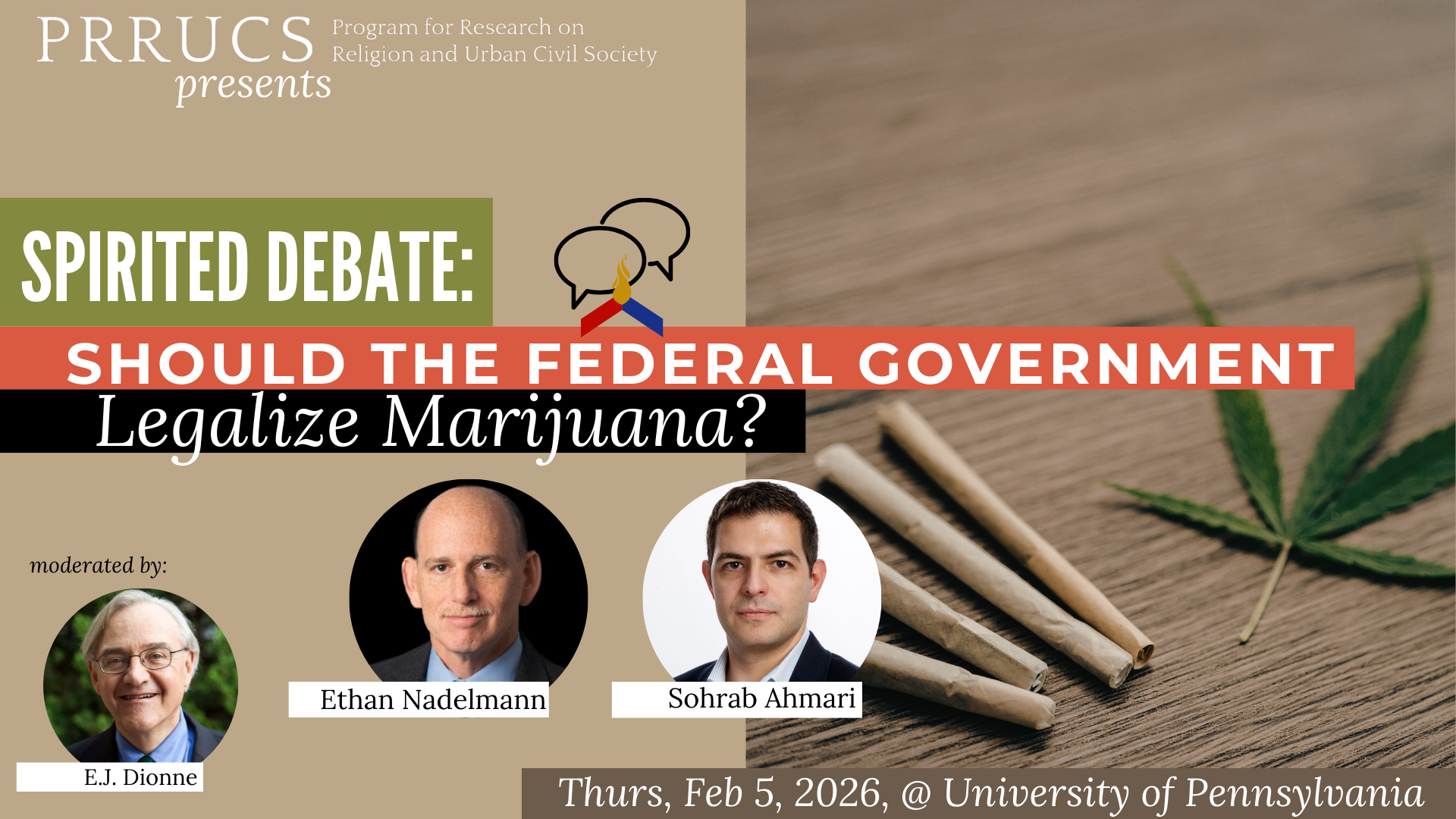
This Spirited Debate symposium will explore multiple and competing perspectives on these and related questions with three outstanding, knowledgeable, and public-spirited panelists:
Serving as moderator, E.J. Dionne of the Brookings Institution, Georgetown University, and The New York Times, and author of many bestselling books including Code Red: How Progressives and Moderates Can Unite to Save Our Country (2020)
Sohrab Ahmari, U.S. editor of UnHerd magazine, founding editor of Compact magazine, former op-ed editor for The New York Post, and author of many books, including the bestselling Tyranny, Inc.: How Private Power Crushed American Liberty and What to Do About It (2023)
Ethan Nadelmann, founding director of the Drug Policy Alliance, profiled by Rolling Stone magazine as the “real drug czar,” the policy entrepreneur behind medical marijuana laws, and author of the classic Cops Across Borders: The Internationalization of U.S. Criminal Law Enforcement (1993)
Date: Thursday, February 5, 5:15 - 6:45 pm
Location: Golkin Room, Houston Hall (3417 Spruce St, Philadelphia PA 19104)
To RSVP, click below.